Twenty Years in China,
Knocking on Korea’s Door with Solar Mounting Structures
Andrew Hong (Jeon Gye-hong), General Director, Tianjin Weike Steel · Korean branch planned for early next year
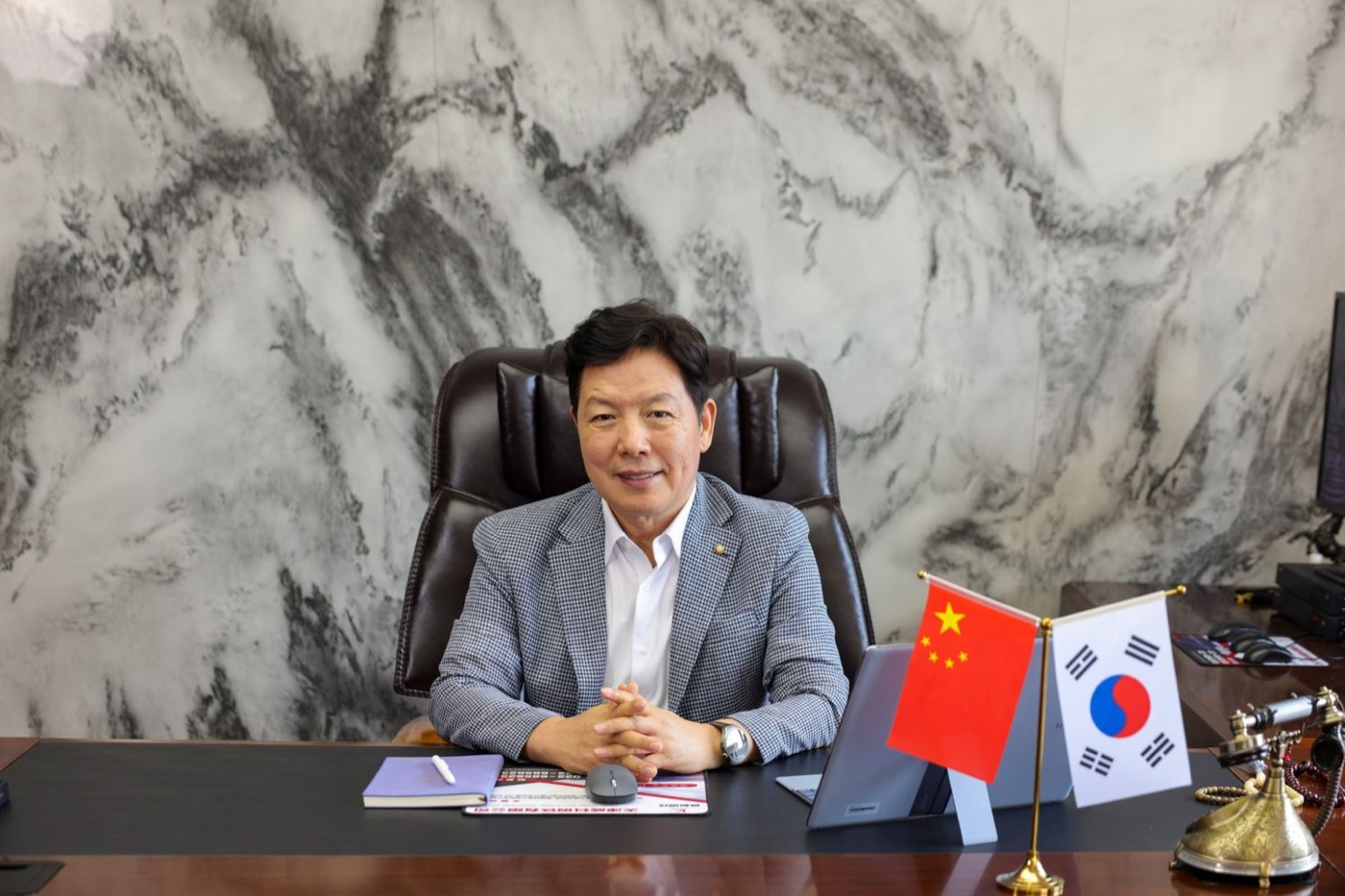
The overseas business of a Tianjin-based solar mounting manufacturer is run by a Korean. He is Jeon Gye-hong (全桂洪, Andrew Hong), General Director, who has spent twenty years in China. The company is Tianjin Weike Steel Co., Ltd. (天津威科钢铁有限公司), and its brand is VK-PVLAND. It began in steel trading in 2016 and moved into solar mounting structures in 2019. Since then it has supplied structures to 23 power plants with a combined capacity of 2.71 gigawatts (GW).
“The company’s chairman is Chinese. I am a co-investor, and I oversee overseas marketing and sales,” Jeon explains. He is preparing to set up a Korean branch early next year.
From packaging materials to solar
His twenty years in China were spent far from solar power. He worked in carrier tape and cover tape used to move electronic components in semiconductor and SMT (surface-mount) processes — packaging materials for automated PCB assembly.
He came to China on assignment from a Korean company, as head of its local subsidiary. Soon after, a key customer that accounted for more than 80 percent of sales was acquired, and the subsidiary was badly hit. In the end he was the one who wound it up. In 2012 he acquired a company in the same industry and started over from scratch. Today, he says, his is the only company in that industry in northern China run directly by a Korean, and there are only one or two in all of China.
What made him think about changing course was how Chinese local companies had changed. “Price gaps used to mean quality gaps. Now Chinese companies build their own equipment, and raw material quality has improved. If anything, Korean companies are now importing Chinese materials and machinery.” Judging it hard to compete on scale with local players backed by heavy investment, he began looking for another growth field.
He remembers the period when Korean companies were leaving China one after another. “I thought the only way to survive in China was to build a next business where both sides could win.”
An interest rooted in environmental activism
His choice of renewable energy has a personal background. After the Nakdong River phenol contamination incident in March 1991, he spent more than five years in Korea’s environmental movement. “Back then the main issues were industrial waste and water pollution. Now it has become the whole climate problem.”
After the 2015 Paris Agreement, countries set Nationally Determined Contributions (NDCs) and pledged carbon neutrality by 2050. Companies declared RE100, committing to source 100 percent of their electricity from renewables. He sees this trend as the foundation of his business.
“This is not optional. Going forward, it can only become essential for survival.”
Why solar among the renewables? Simple: it is the most widely applicable today, and its industrial ecosystem is already in place.
Partnering on people
In January 2025, through a Chinese acquaintance, he met Ren Shujun (任树军), Chairman of Weike Steel, and joined as a co-investor. In the end, he says, the deciding factor in choosing a partner was the person.
“Working together for nearly two years, I have seen his character, drive and expertise. He is a CEO in his thirties with tremendous drive.”
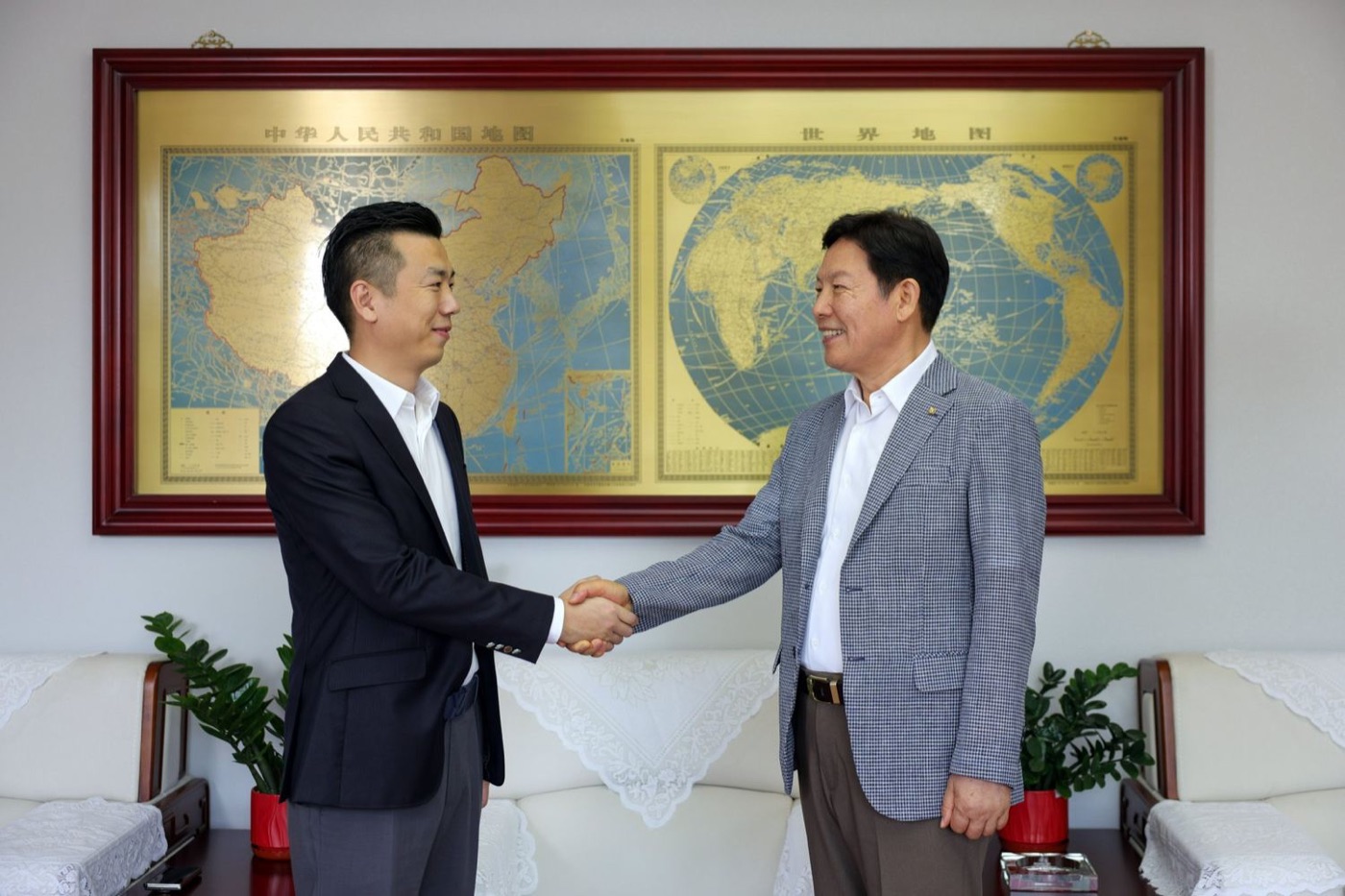
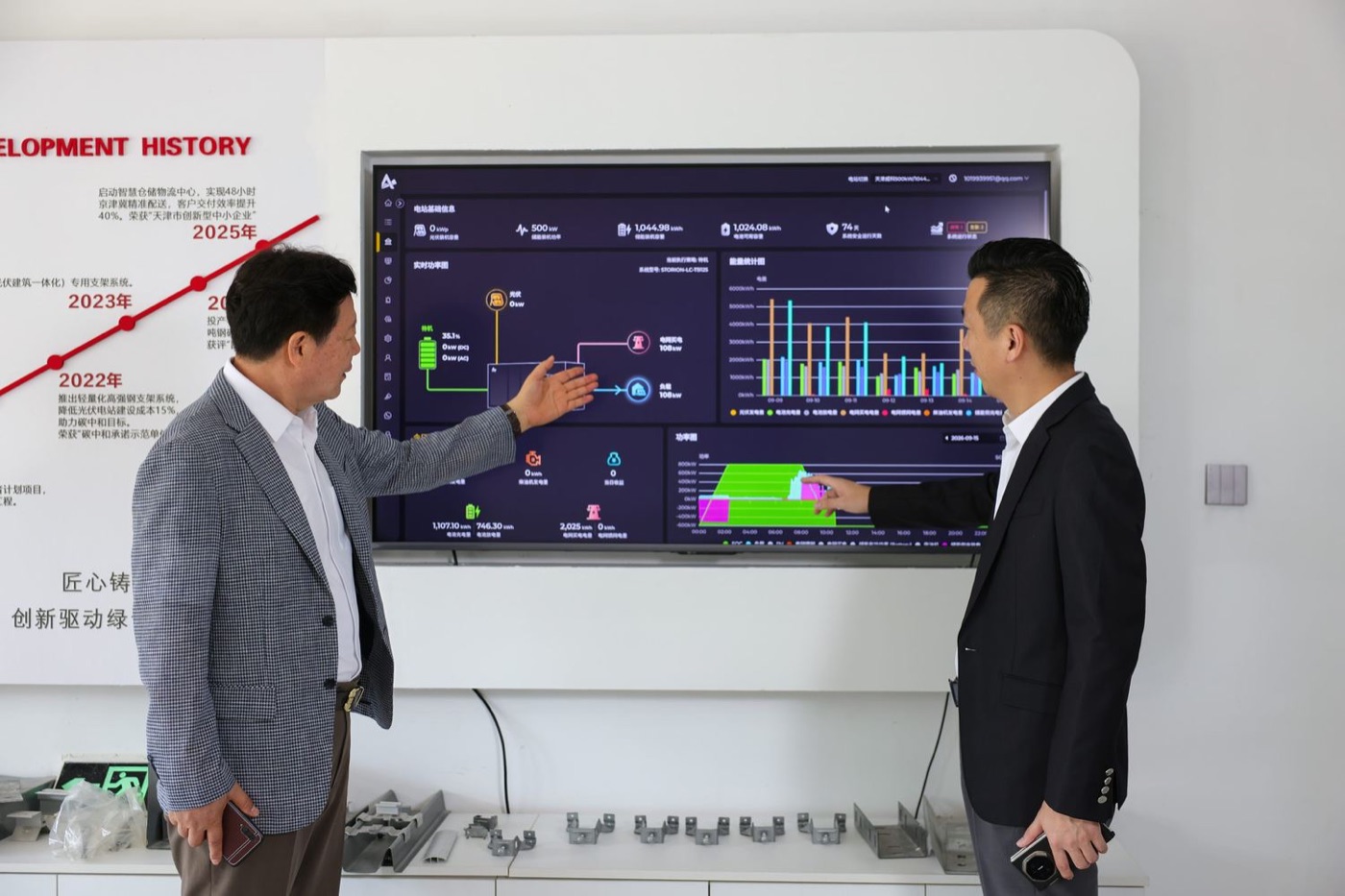
Ren worked at an aluminum materials manufacturer before going independent in 2016. The company history on the headquarters wall shows it began by buying and selling steel. The next year it opened its first processing center and shifted to custom fabrication, and in 2018 ISO 9001 certification laid the groundwork for standardized production. It fully entered solar mounting structures in 2019, when it started an intelligent cold-forming line.
Growth continued step by step. In 2020 annual capacity passed 300,000 tonnes and the company won projects under the Chinese government’s solar “Top Runner” (領跑者) program. In 2021 it completed a fully digital factory linking ERP and MES. Today it operates as three entities: a manufacturing company that makes the structures, an EPC (Engineering, Procurement, Construction) company, and an export company.
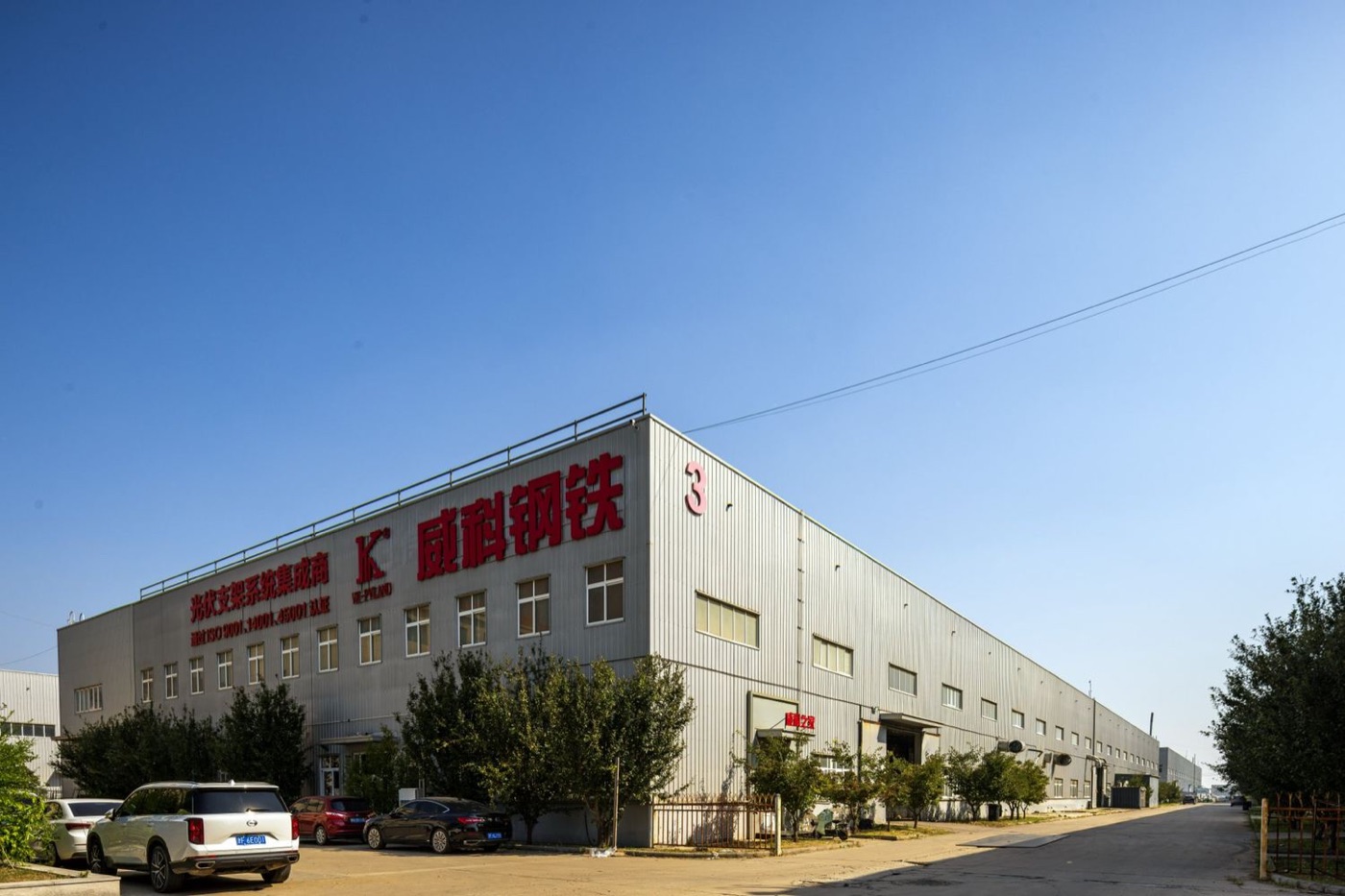
A factory turning out 300,000 tonnes
The plant sits on about 40,000 m² of land with 16,500 m² of floor space. Annual capacity is 300,000 tonnes and annual revenue is around CNY 1 billion. Equipped with laser cutters, automated cold-forming lines, hydraulic press brakes, plasma cutters and robotic welding, it produces C, U and Z channels and a wide range of structural components.
The company’s list of supply projects gives a sense of scale: 520 MW for the 2 GW Ningdong solar base in Ningxia, 460 MW for a project in Chengde, Hebei, and 415 MW for a project in Jiashi County at the Tarim Oilfield in Xinjiang — 23 projects in all, totaling 2,710 MW. The list includes a 50 MW export to Japan and one project now under construction.
Making carbon-cutting equipment with less carbon
Another pillar the company emphasizes is carbon in manufacturing. Its lightweight high-strength steel mounting system, launched in 2022, reduces the amount of steel needed for the same plant and cut construction costs by 15 percent, the company says. In 2024 it started a zero-carbon electric furnace line that lowered emissions per tonne of steel by 65 percent, earning a national-level green factory rating. These figures come from the company history posted at its headquarters.
In Korea, too, companies that have declared RE100 and public buyers are starting to look at the carbon footprint of materials. Supplying cheap structures and supplying structures made with less carbon are two very different stories at the negotiating table.
Design and quotation included, shipped fabricated
The products under discussion in Korea are five types of solar mounting structures: agrivoltaic, carport, ground-mount, floating and rooftop. There are two ways to work together. If the Korean side provides drawings, the company fabricates to them; if it provides only basic site data, the company offers both a design and a quotation.
“Just give us the basic site data and we will design it and quote. Installation is done in Korea, and if there is a problem with what we fabricated, that is our responsibility. If needed, we send our engineers to the site.”
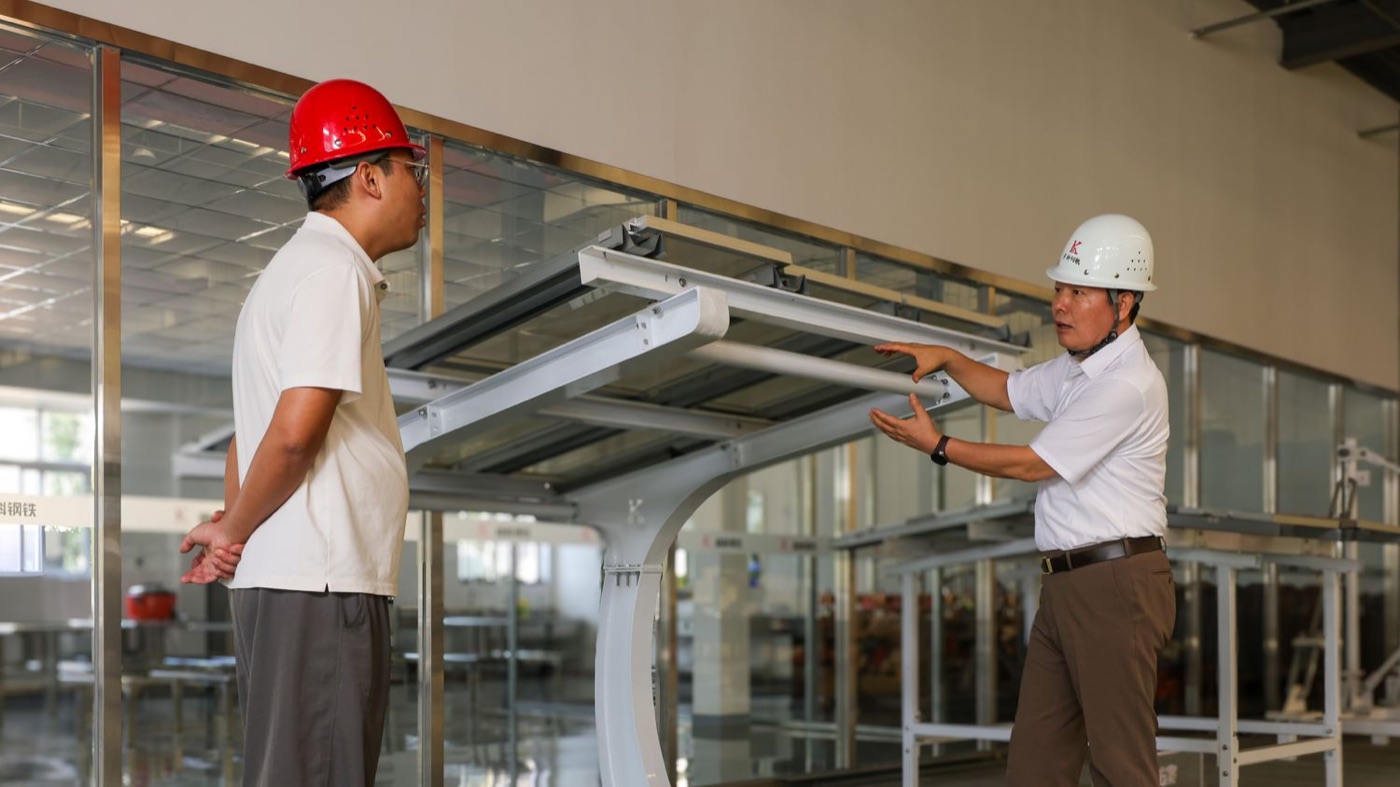
Structures with relatively fixed specifications, such as rooftop and agrivoltaic systems, can use existing designs. Ground-mount and floating systems, however, vary with terrain and geology, and he made clear that in those cases measured data from the Korean site must come first.
Not better or worse — a division of roles
He sees Korea as a market with plenty of room to grow. China’s installations have expanded so much that new grid connections are restricted in some regions, while Korea’s electricity demand keeps rising.
The business models differ too. “In Korea the main model is selling the electricity you generate. In China, self-consumption — factories use the power first and sell the surplus — has become the norm.”
Weike Steel runs such systems at its own plant. A 0.5 MW rooftop array supplies part of the factory’s needs, with the rest sold, he explains. The monitoring screen at headquarters also showed a 500 kW, 1,044 kWh energy storage system (ESS) in operation. In effect, the company runs what it sells in its own factory first.
“Through repeated large-scale construction, China has built up data on materials, fabrication, design and installation. Korean companies have the market and the business capabilities. Connecting the two is what I want to do.”
The biggest barrier is payment, not technology
The biggest challenge in entering Korea, he says, is neither quality nor price but payment terms. Few Korean small and mid-sized importers open letters of credit (L/C), so deals are usually by telegraphic transfer (T/T). The usual terms are half on signing and the other half when the shipment is ready, and the split can be negotiated. Still, the buyer must pay in full before receiving the goods.
“I know that is a burden for Korean companies. That is why I am in the middle.”
His response has four parts. First, factory inspections: executives and staff from Korean companies have already visited the Tianjin plant, and talks are continuing. Second, shipping evidence: container loading photos and bills of lading (B/L) are obtained through the logistics company and passed to the importer. Third, sending engineers to Korean sites when problems arise. Fourth, the Korean branch.
“Most people who come and see the factory leave satisfied. Showing our scale and our products is the surest way for us.”
A Korean branch early next year, then EPC
The Korean branch is being prepared for launch early next year. Its roles will be customer service and marketing, technical support and after-sales service, and recruiting and managing regional dealers. Jeon is expected to head the branch once it opens.
“With a branch, we can act immediately when problems arise. That is exactly what prospective partners want to know most.”
Supplying structures is the first goal, but he is looking further. With an EPC structure in place, the plan is to work with Korean companies and take part in design, procurement and construction. The branch’s detailed business plan and dealer terms, however, are still under review.
The company has not yet obtained Korean standards certification. “We will proceed step by step once the branch is established,” he says.
“Growing together”
Finally, we asked what he would like to say to Korean companies.
“When I meet people from Korean companies at trade shows, I can feel that their perception of Chinese products has changed a lot. They acknowledge that the gap has narrowed not only in price but also in quality and installation experience.”
But what he stressed was not the product.
“I am in China, but I am Korean. What I aim for is working with Chinese companies to open overseas markets together. Not just selling products for profit, but exchanging technology and growing together. That is my ultimate goal.”
Andrew Hong (Jeon Gye-hong), General Director, Weike Steel
Demand for green energy can only grow, in his view. “This is not a business that ends after a year or two. Regardless of age, I have found the drive to focus again.”
Weike Steel VK-PVLAND
Based on materials provided by the company
| Company | 天津威科钢铁有限公司 · Tianjin Weike Steel Co., Ltd. (brand VK-PVLAND) |
|---|---|
| Affiliate | Tianjin Weike New Energy Technology Co., Ltd. |
| Founded | May 26, 2016 |
| Address | No. 32 Tai’an Road, South District, High-tech Industrial Park, Ziya Economic and Technological Development Area, Jinghai District, Tianjin, China |
| Registered capital | CNY 30 million |
| Annual revenue | CNY 1 billion |
| Plant | About 40,000 m² site, 16,500 m² floor space |
| Annual capacity | 300,000 tonnes |
| Main products | Solar mounting structures and parts, greenhouse structures and parts, steel structures |
| Track record | About 2.71 GW across 23 projects (company data) |
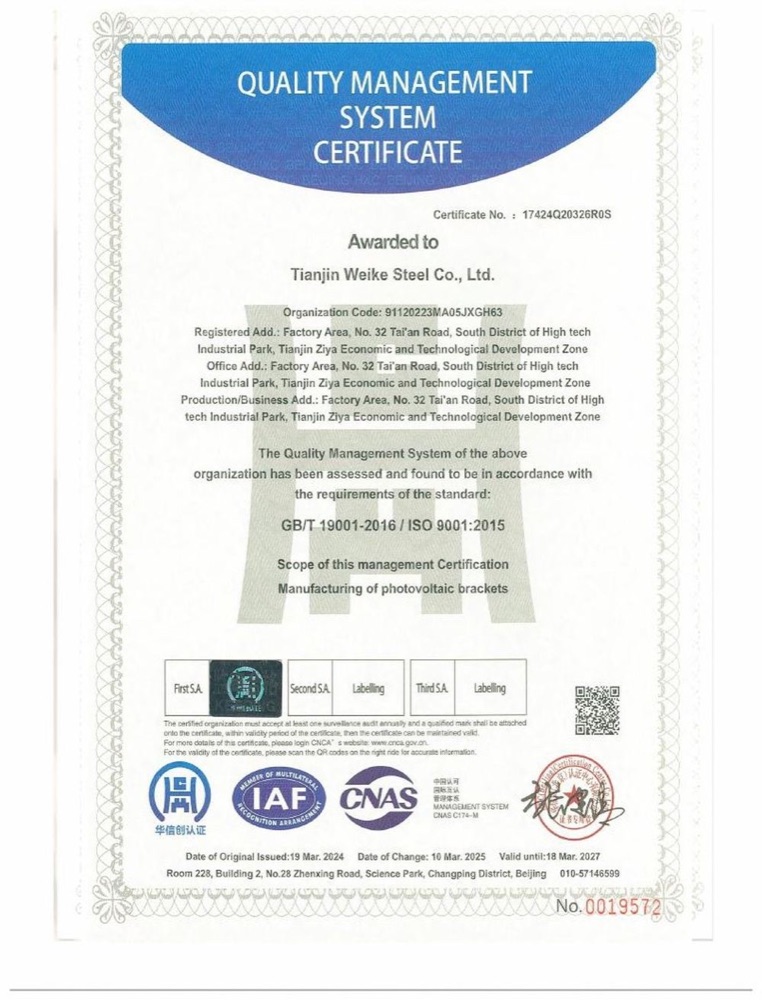
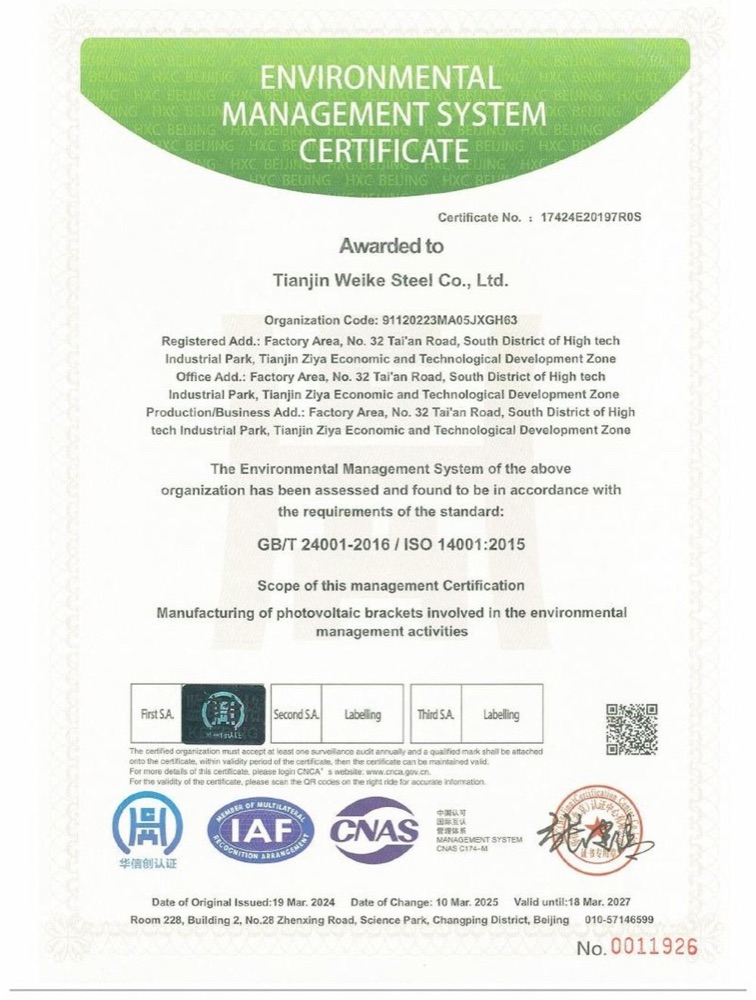
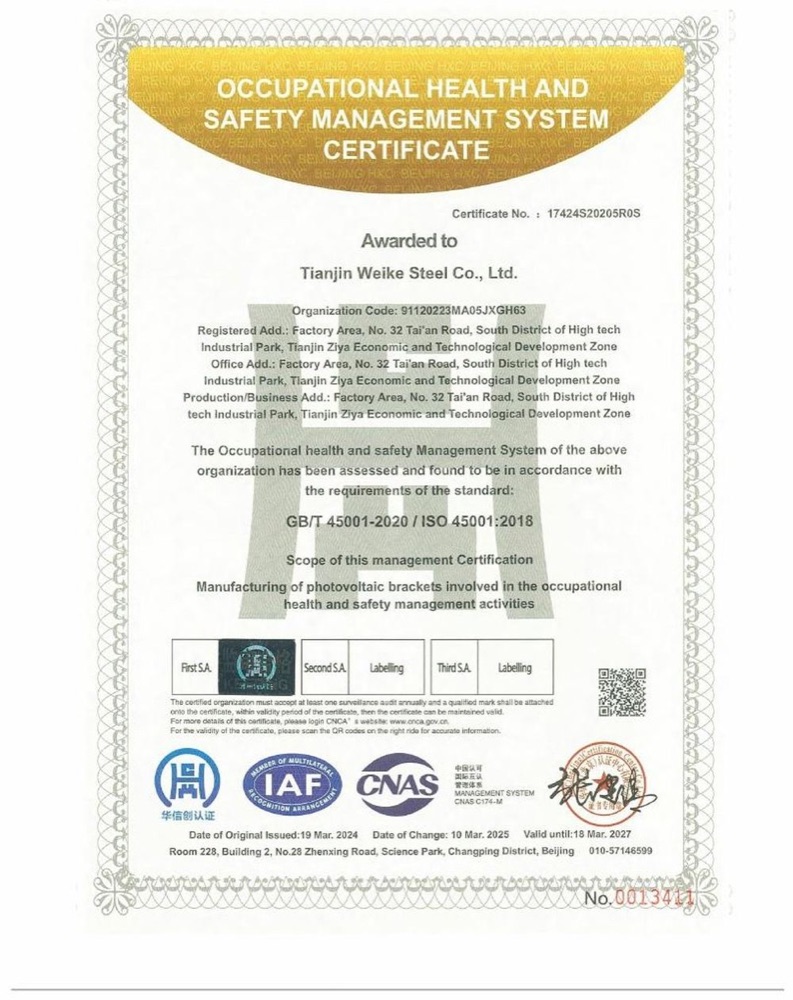
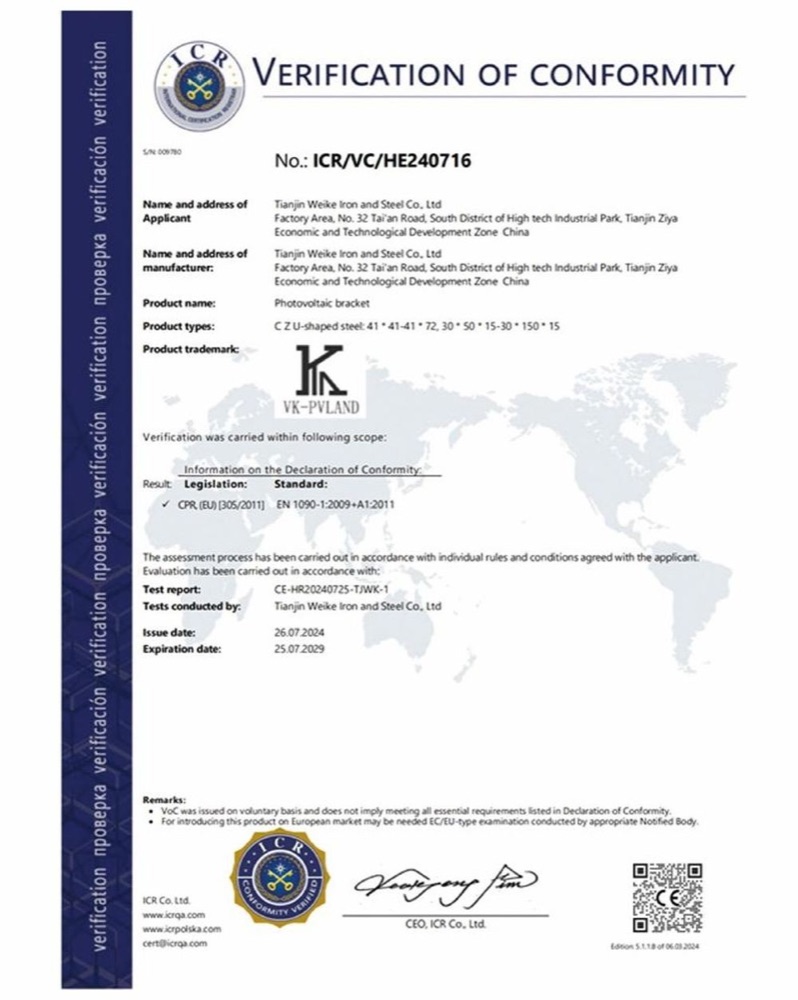
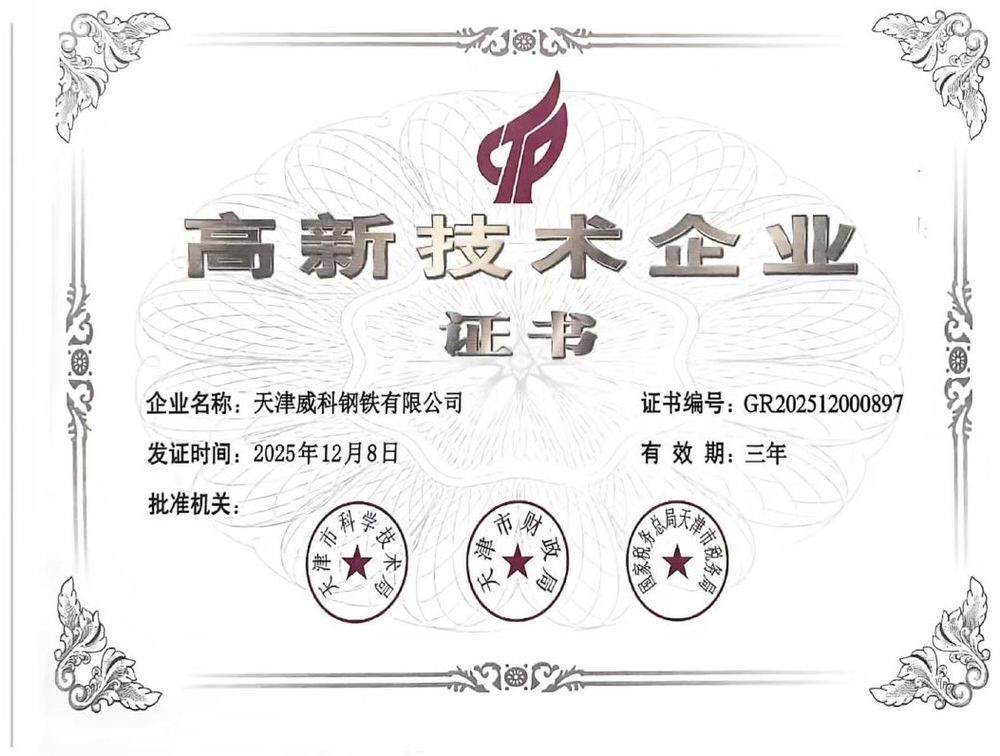
| Key certifications | ISO 9001, 14001 and 45001 (valid until March 18, 2027); EN 1090-1 Verification of Conformity (VoC, valid until July 25, 2029); China High-Tech Enterprise (issued December 2025, valid 3 years). Also holds third-party ratings including Green Enterprise AAAAA, 5-star Green Supply Chain Management and AAA enterprise credit |
Certifications
China +86 130-2227-3510
Email tjsjosung@163.com
Company page thefocus.kr/weikesteel/en
Text by Ham Jin-young, Editor-in-Chief · Photos by Lee Young-ho | 포커스기업소식 FOCUS BUSINESS MAGAZINE
Company history and certification details are based on materials provided by Weike Steel and information posted at its headquarters.