Tianjin K-FESTA, Sept 12–13 · The 7th Korean Food Culture Festival
Hosted by the Korean Embassy in China and the Ministry of Agriculture, Food and Rural Affairs · Tianjin Aegean Shopping Park · Two days to "travel Korea through its flavors"
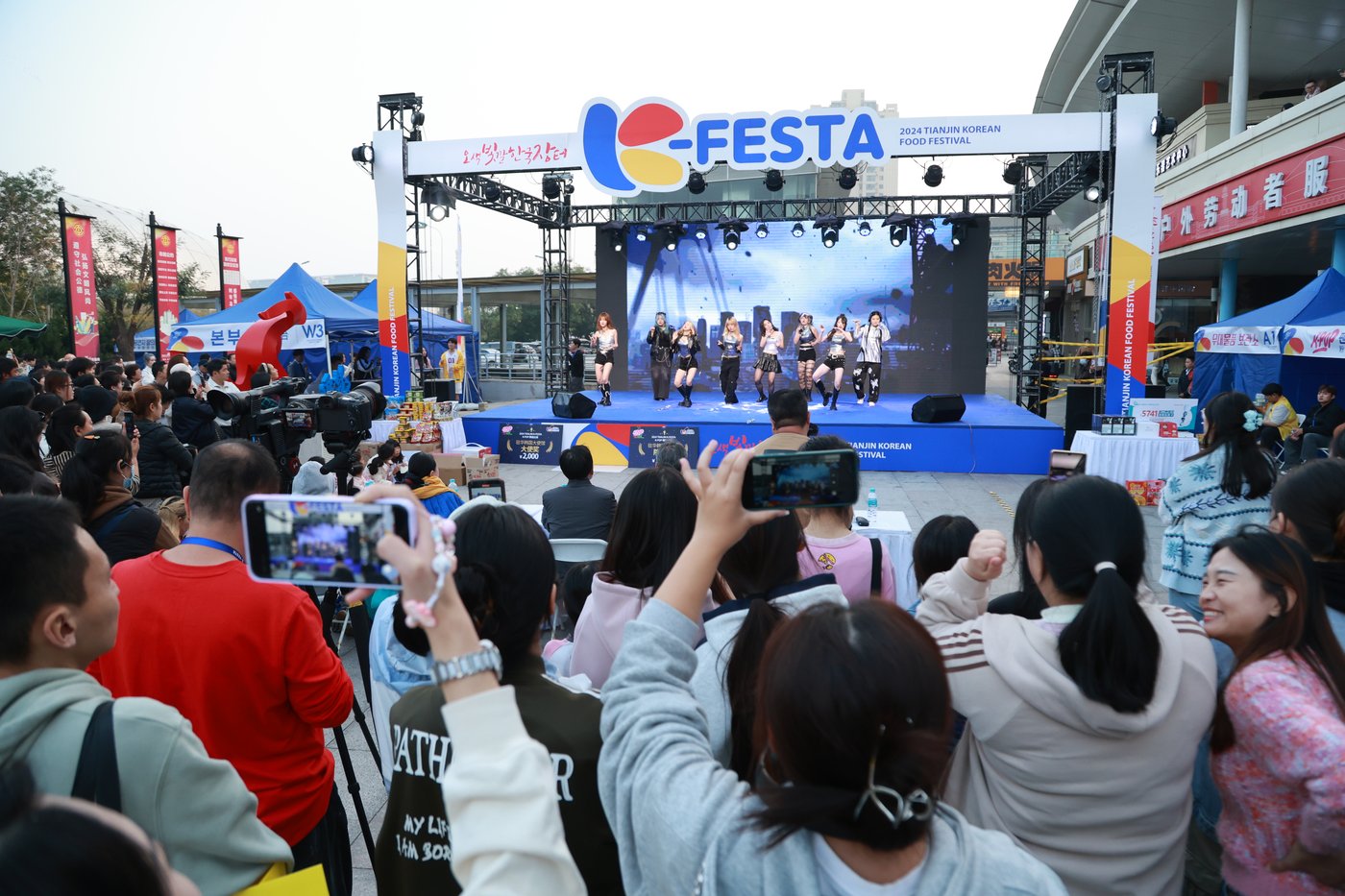
"2026 Tianjin K-FESTA (the 7th Korean Food Festival)," Tianjin's signature Korean food culture festival, will take place over two days, September 12–13, on the open-air stage at Aegean Shopping Park in Nankai District, Tianjin. Both days run from 10 a.m. to 8 p.m.
Now in its seventh year, Tianjin K-FESTA is hosted by the Korean Embassy in China and the Ministry of Agriculture, Food and Rural Affairs, and organized by the Tianjin Korean Food Council, the Tianjin Korean (Business) Association, and the Beijing branch of the Korea Agro-Fisheries & Food Trade Corporation (aT). This year's theme is "A Korean Feast: Travel Korea Through Its Flavors," and organizers expect around 3,000 visitors, including local Chinese residents, multicultural families and Korean expatriates.
A new Korean food pavilion · 20 Korean dishes and traditional games
This year adds a "Korean Food Pavilion" to strengthen local promotion of Korean food brands. With 12 booths, it introduces, by brand, Korean staples already in the Chinese market such as instant noodles, gochujang and sauces, cookies and snacks, alcoholic beverages, drinks, kimchi and fermented foods, convenience foods, and seasonings.
The Korean food court features the "20 Korean dishes loved by foreigners," which scored highly in an overseas Korean-food consumer survey by the Ministry and the Korean Food Promotion Institute — favorites suited to open-air stalls such as fried chicken, kimchi, bibimbap, grilled meat, instant noodles, grilled pork belly, tteokbokki, gimbap, japchae, popcorn chicken, seafood-scallion pancake and samgyetang. There is also a traditional games and culture zone the whole family can enjoy, with rice-cake pounding, yut nori, pitch-pot (tuho), dalgona, jegi-chagi, face painting, and making Samulnori dolls and badges.
The venue is made up of 40 booths in total, including the Korean food pavilion, the food court, the experience zone, a painting area, a photo zone and the stage.
Dancing on day one, singing and cooking on day two · a lively K-POP stage
The stage program differs by day. Opening day, September 12, is "Dance Day," with age-group K-POP dance contests from kindergarten and elementary through middle and high school and adults, along with random-play dance. The next day, the 13th, is "Song & Food Day," featuring a Korea–China masked-singer contest and a Korean-food cooking class where participants make tteokbokki, cold noodles with fried dumplings, and kimchi fried rice.
There are also audience-participation events. Take a photo at the main photo zone and post it to social media (SNS) to redeem merchandise at the control desk; spend 300 yuan or more at the venue and verify three food photos on SNS to receive a carry-on suitcase (first 100 only). Because contest and game eligibility is tied to SNS posting, visitors themselves become promotional channels.
K-Food exports hit a record · stronger local promotion
Tianjin K-FESTA has been held for years to raise awareness of Korean agri-food in China and to strengthen unity within the expatriate community. Organizers said that, amid growing interest in Korean food — with K-Food+ exports reaching a record 13.6 billion dollars in 2025 — this year's event places its weight on brand promotion and market expansion aimed at local consumers.
← Back to list