China's food and cosmetics import rules: simpler procedures, wider oversight
China is simplifying import procedures for food, cosmetics and medical devices while widening what it regulates. At a seminar for Korean companies in Tianjin on Sept. 3, Park Jeong-woo, head of the China office of the Korea Testing & Research Institute (KTR), urged firms to read the direction of change and prepare early.
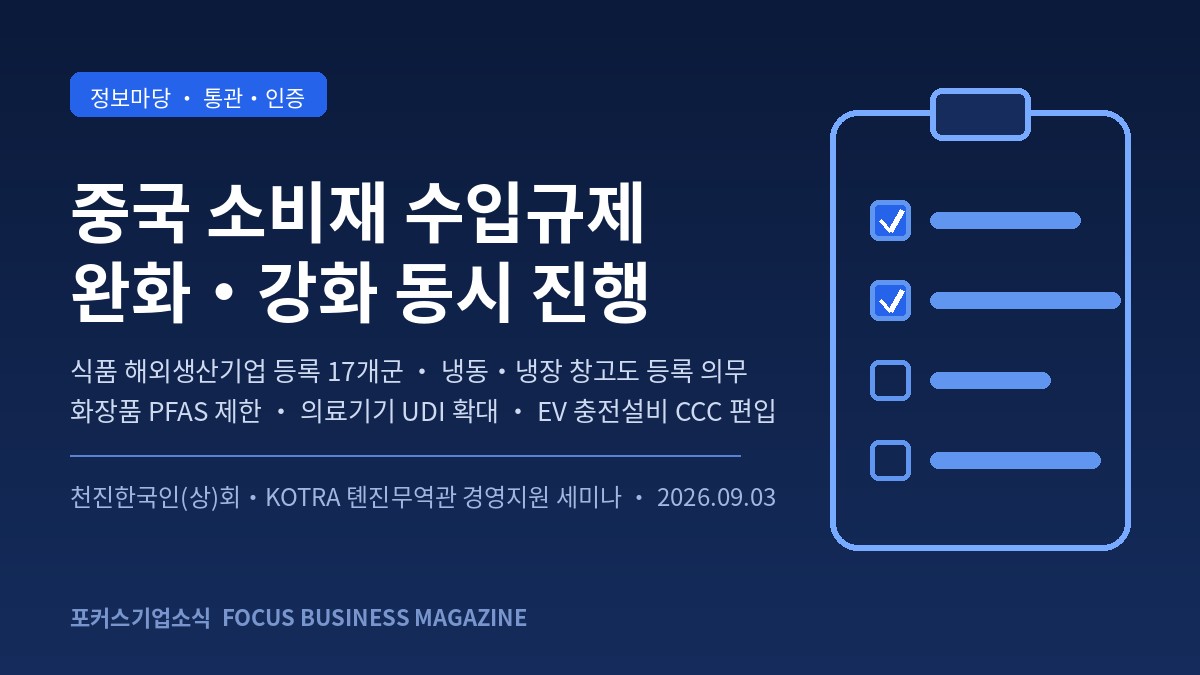
The seminar was co-hosted by the Korean Chamber of Commerce in Tianjin and KOTRA's Tianjin office. According to Park, the registration system for overseas food manufacturers now covers 17 food categories, and companies apply directly. At the same time, overseas storage facilities such as cold and frozen warehouses have been brought into the registration scope. China's General Administration of Customs (GACC) revised rules on registering overseas food manufacturers took effect on June 1.
For cosmetics, some documentation requirements are being eased, but restrictions on ingredients such as PFAS (per- and polyfluoroalkyl substances) are planned. Unique device identification (UDI) for medical devices is expanding, and electric vehicle charging equipment is being added to China Compulsory Certification (CCC). Park stressed that products sold in China must meet national GB standards even when they are not subject to compulsory certification.
Business Checkpoints
Companies handling chilled or frozen food should first check whether the overseas warehouses their products pass through are registered. Chinese-language labels, a common cause of customs delays, should be rechecked before shipment. Cosmetics and medical device makers save money by building ingredient and labeling requirements in at the development stage. Whether a rule applies to a specific product, and when, should be confirmed against GACC notices and with specialist bodies such as KTR or KOTRA.
References
※ This article is based on reporting by the Overseas Koreans Newspaper and reports on announcements by China's General Administration of Customs.
← Back to list